
Sports Mental Toughness Coaching
Most athletes don’t struggle because they don’t train enough. They struggle because something inside them keeps shifting. One day things feel clear, the next day they don’t. Confidence comes and goes. Focus feels sharp for a while and then suddenly slips. This is usually when people start talking about mental toughness. Psyog’s sports mental toughness coaching is meant for athletes who have already seen that motivation and mental tricks don’t really last.
Since 2015, we’ve worked with players from different sports and levels, including associations like Punjab Cricket Association, Haryana Cricket Association, Himachal Cricket Association, and clubs such as Minerva Football Club. What we noticed early on was simple. Most athletes already know what they are supposed to think. The problem is that thinking doesn’t stay steady when pressure increases.
This coaching is not about fixing the mind. It is about understanding it.
In sports mental toughness coaching, the usual advice is to stay positive, stay confident, stay calm. Athletes try. Sometimes it works. Often it doesn’t. Under pressure, thoughts speed up, emotions tighten, and the body follows whatever is happening internally. At that point, no amount of self-talk feels reliable.
Our way of working starts by noticing this instability instead of fighting it. Athletes are guided to see how mental pressure builds on its own and how effort often adds to the noise. When this is seen clearly, something begins to slow down. Reactions are not as sharp. Decisions don’t feel rushed. Action becomes simpler.
This is not something that happens overnight. It grows through observation.
Mental Toughness For Sports
When people talk about mental toughness for sports, they often describe discipline or belief. Athletes then turn to routines like affirmations, journaling, visualisation, or breathing exercises. These methods can help when conditions are calm. But competition is rarely calm.
Mental toughness for sports cannot depend on keeping the mind in a certain state. The mind changes too quickly. One thought replaces another. One emotion triggers the next. This is why flow or zone states appear randomly and disappear just as suddenly.
What athletes usually notice during their best performances is not extra effort, but less interference. The mind feels quieter. Action feels natural. Through awareness-based coaching, athletes begin to recognise this space and understand how to stop disturbing it unnecessarily.
If you would like a deeper understanding of how to improve mental toughness in sports beyond routines and motivation, you can read our detailed explanation here.
Mental Toughness For Athletes
Mental toughness for athletes is often mistaken for mental hardness. But pushing harder internally usually creates more friction. The mind is unstable by nature. Confidence rises and falls. Motivation fluctuates. Trying to control this endlessly becomes tiring.
Our work helps athletes step slightly outside this movement. When identification with thoughts reduces, performance no longer depends on mood. Many athletes describe this as feeling grounded, even when pressure is high. Not numb. Just steady.
Mental toughness for athletes, in this sense, is not something added. It is something uncovered.
Sports Mental Toughness Coaching Program
Athletes who join our sports mental toughness coaching program often come with specific goals. Better focus. More consistency. Fewer mental lapses. What they usually discover is a different relationship with their inner world. Responses feel less forced. Control feels lighter. Performance feels more fluid without becoming careless.
This coaching suits athletes who are done collecting techniques and are willing to look inward honestly. If you feel that the real challenge is not skill or effort, but what happens inside you under pressure, this approach may resonate.
Meet Your Trainer
Rajat Sharma, the founder of Psyog, comes from a psychology background and has been an athlete. He often experienced the “zone” state which still remains a mystery for most. With his knolwedge in Psychology and human intelligence, he has formulated a method that helps athletes enter the zone state at will.
Rajat Sharma believes that human potential begins when the limited psychology is transcended. He has worked with elite athletes, educational institutions and people going through emotional problems. He founded Psyog with a clear intention: “Human brilliance blossoms beyond thought and information,” and through his approach he has helped several individuals go beyond a compulsive living.
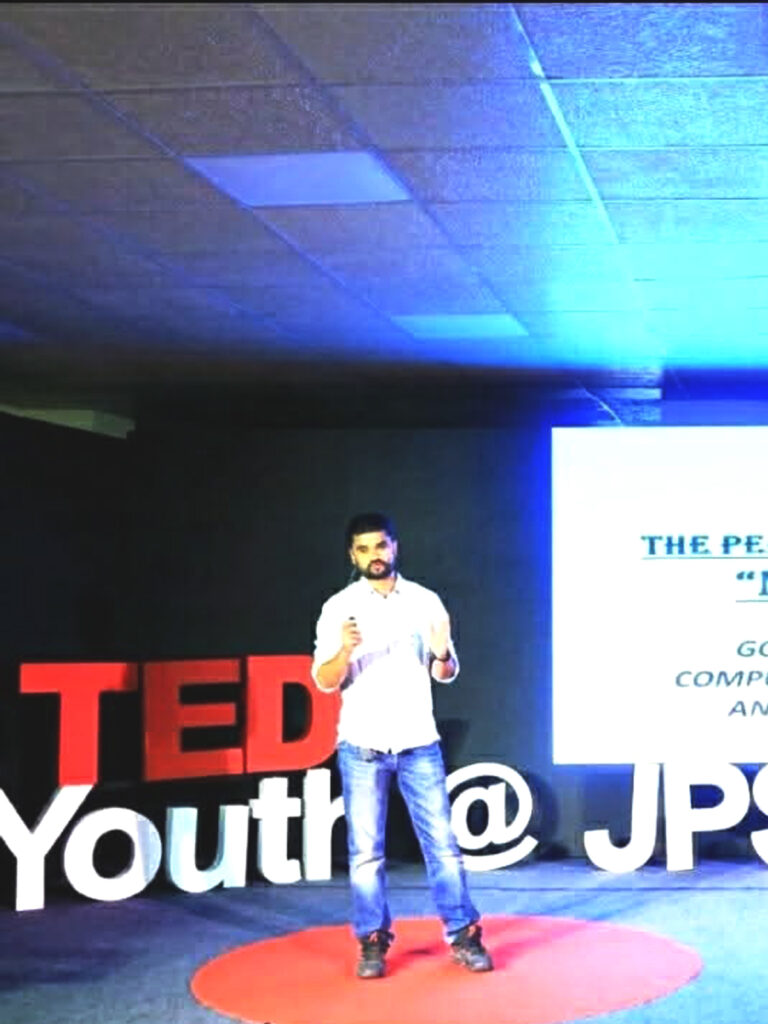
He has also shared the TEDx stage with renowned thought leaders and often shares his insights on podcasts and events. He also is the author of three books, The Conscious Destiny, The Zoned Athlete, and Don’t Live But Die Well. His approach and methods are practical, simple, and show measureable results.
FAQs
Mental toughness in sports usually gets talked about as mental strength or control, but most athletes already know how hard it is to keep the mind steady. Thoughts change, emotions shift, and pressure makes everything louder inside. Trying to train the mind directly often turns into more effort and more struggle.
A more reliable approach begins with noticing how easily we get caught in our thoughts during performance. When athletes learn to step back from this mental noise instead of constantly reacting to it, something changes. Action becomes cleaner, focus feels lighter, and moments of flow start appearing more naturally. Mental toughness then stops being about forcing the mind and starts becoming about staying present without getting tangled in it.