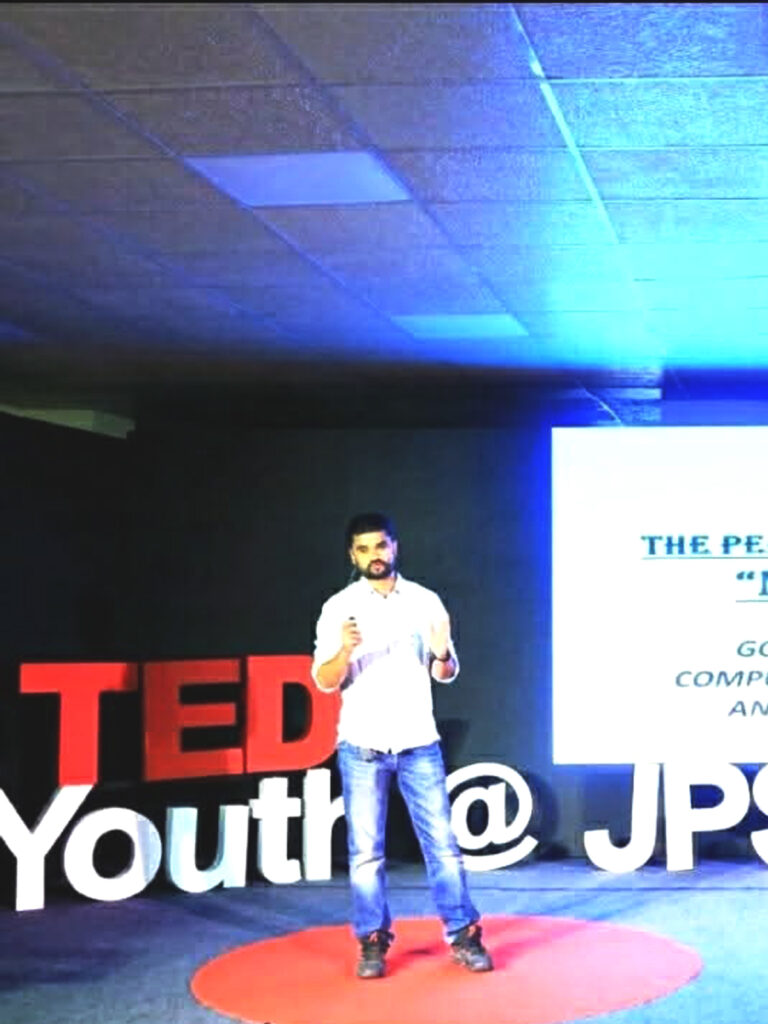
Rajat Sharma is the founder of Psyog, but his work did not begin with some big plan or a fixed idea. It grew slowly, almost quietly, through years of questioning his own mind and watching how people around him were struggling with the same things in different ways. He ended up writing three books—The Conscious Destiny, The Zoned Athlete, and Don’t Live but Die Well—not because he wanted to become an author, but because these ideas kept building inside him and he felt they needed a place to live. Over time he also found himself on a TEDx stage and later speaking at various events and podcasts, not as an expert who has everything figured out, but as someone who is sharing what he has experienced and learned along the way.
From Psychology to an Athlete’s Inner World
During his school and college days, he used to be an athlete and have played at club and state levels. However, it was during this time that he started to experience something magical and often. While being on the field, he would slip into “the zone” state which he described like a magical state of trance. That state, he said, was way above meditation, happiness or having a positive state of mind. It was simply, beyond thoughts. He always felt that if people could touch that space even for a moment, they would experience something far beyond usual mental techniques or coping strategies. When he later entered psychology, he expected to find a clearer understanding of this state, but nothing he studied matched what he had lived on the field. That gap stayed with him and kept pushing him to look beyond what he was taught.
Building His Own Framework and Helping People Since
Because he couldn’t find answers in the usual places, Rajat slowly began building his own way of understanding the mind. Although the entire process took over 6 years and involved working with professionals with the similar curiosity, experiments, failures, and above all, a will to serve. Since then, he has worked with athletes at the highest level, with sports clubs, educational institutions, and with individuals dealing with different psychological struggles. His style is straightforward and sometimes hard, because he never believed in comforting someone with soft words that do nothing for them in the long run. He prefers being honest, even when it is uncomfortable, because he feels that real change begins only when the truth is not avoided or covered. He does not believe in consolation, but a permanent solution.